Every Urbabn Nature Walk is full of discussions and conversations that help us all understand nature a little better. There are always a couple questions that remain unanswered, because no one present happens to know the answer. I’m getting better at remembering to write these down and research them later.
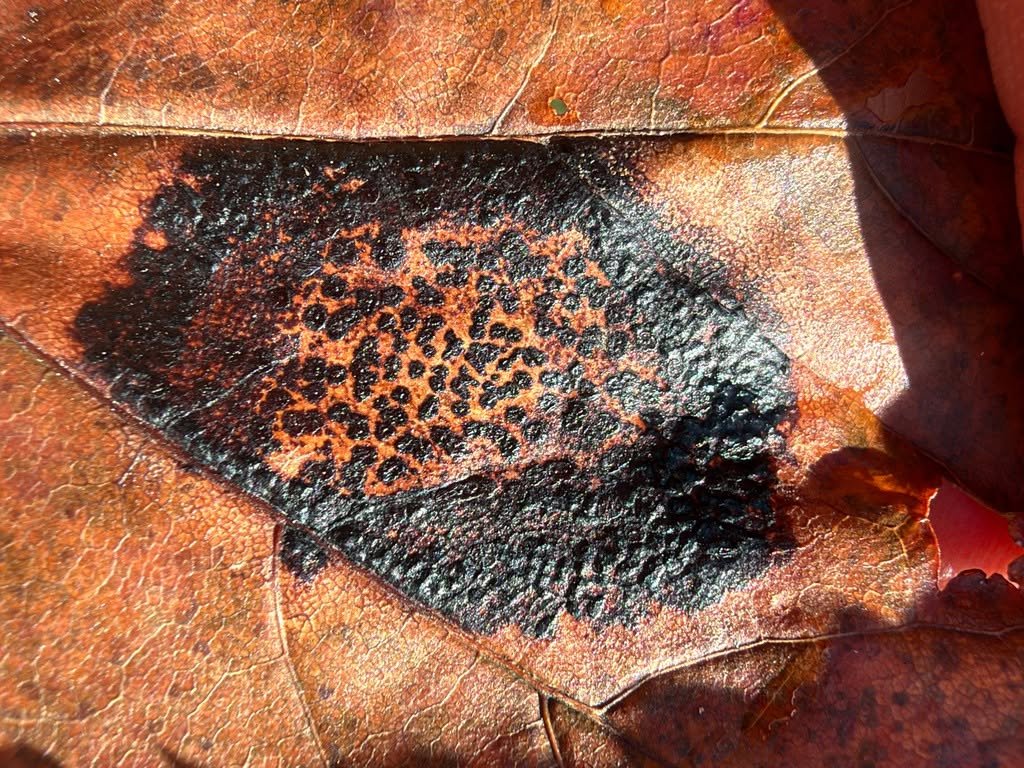
First, and most importantly, is a correction. We were discussing tar spot, Rhytisma sp., a parasitic fungus that produces a black spot on maple leaves. I incorrectly described this fungus as one that lives all the time, systemically through the plant. In fact, the fungus invades the leaves in spring, feeds on the leaf tissue throughout the summer, produces the tar spot lesion as a spore-producing fruiting body, and the cycle continues. The fungus must newly invade the tree’s leaves every year.
Second, and easiest to check and settle: cabbage white butterflies overwinter as pupae. You were right, Ann!
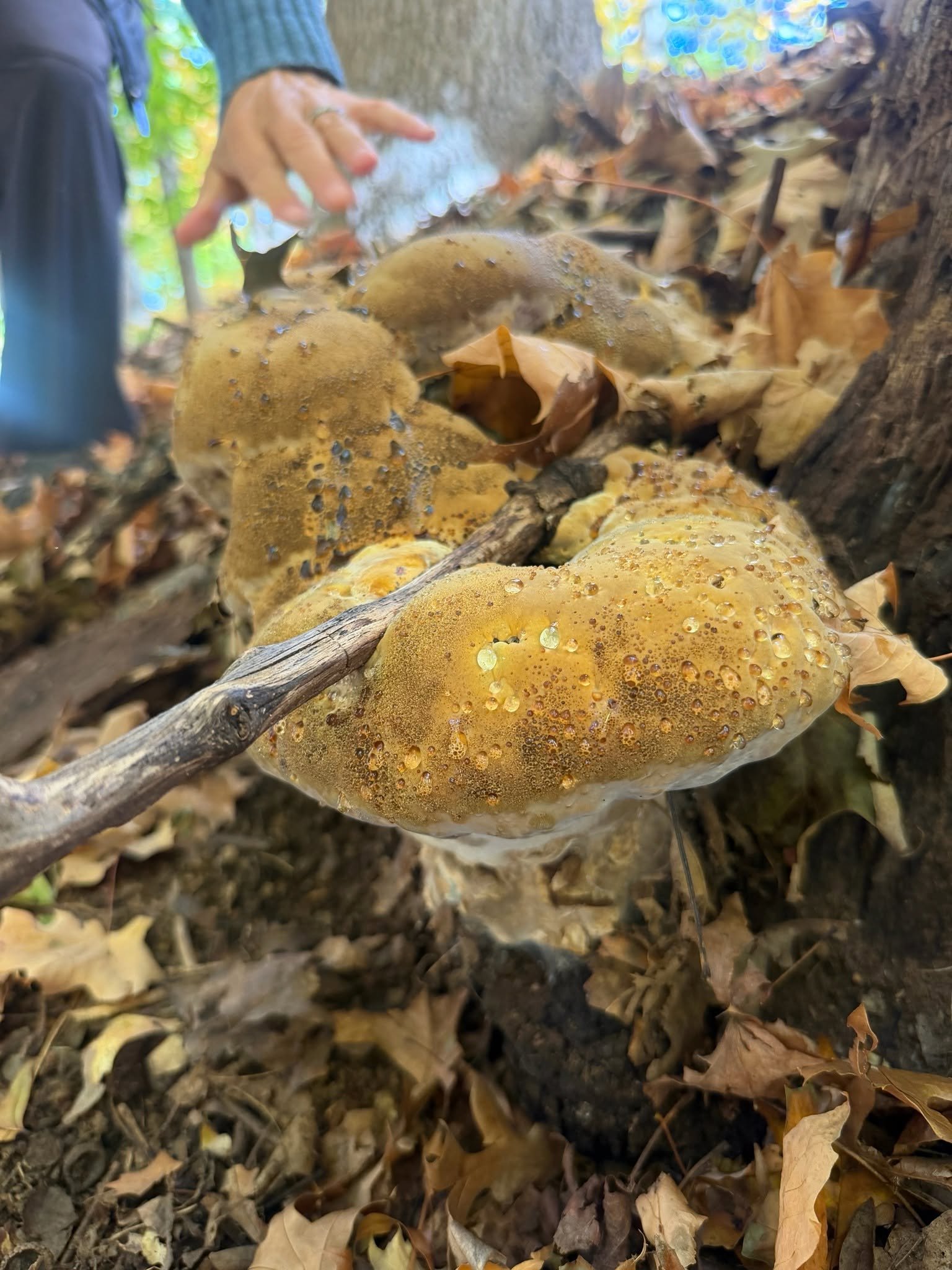
Next, with the least-satisfying answer is the question of “what exactly is going on with fungal guttation?” Guttation is the production of droplets of fluid from the edges of plant leaves or from fungi. The process is fairly well-studied in plants, but less so in fungi. What is supposed to date is that when a fruiting body is growing, some excess water from the process is exuded as guttation. Studies show that these droplets are not just water, but contain a number of “secondary metabolites” as well as carbohydrates, amino acids, and related compounds. Is it a way of releasing waste products? A defense reaction against other organisms? Some combination of these? We are going to have to accept that guttation will continue to be somewhat mysterious and ambiguous for now.
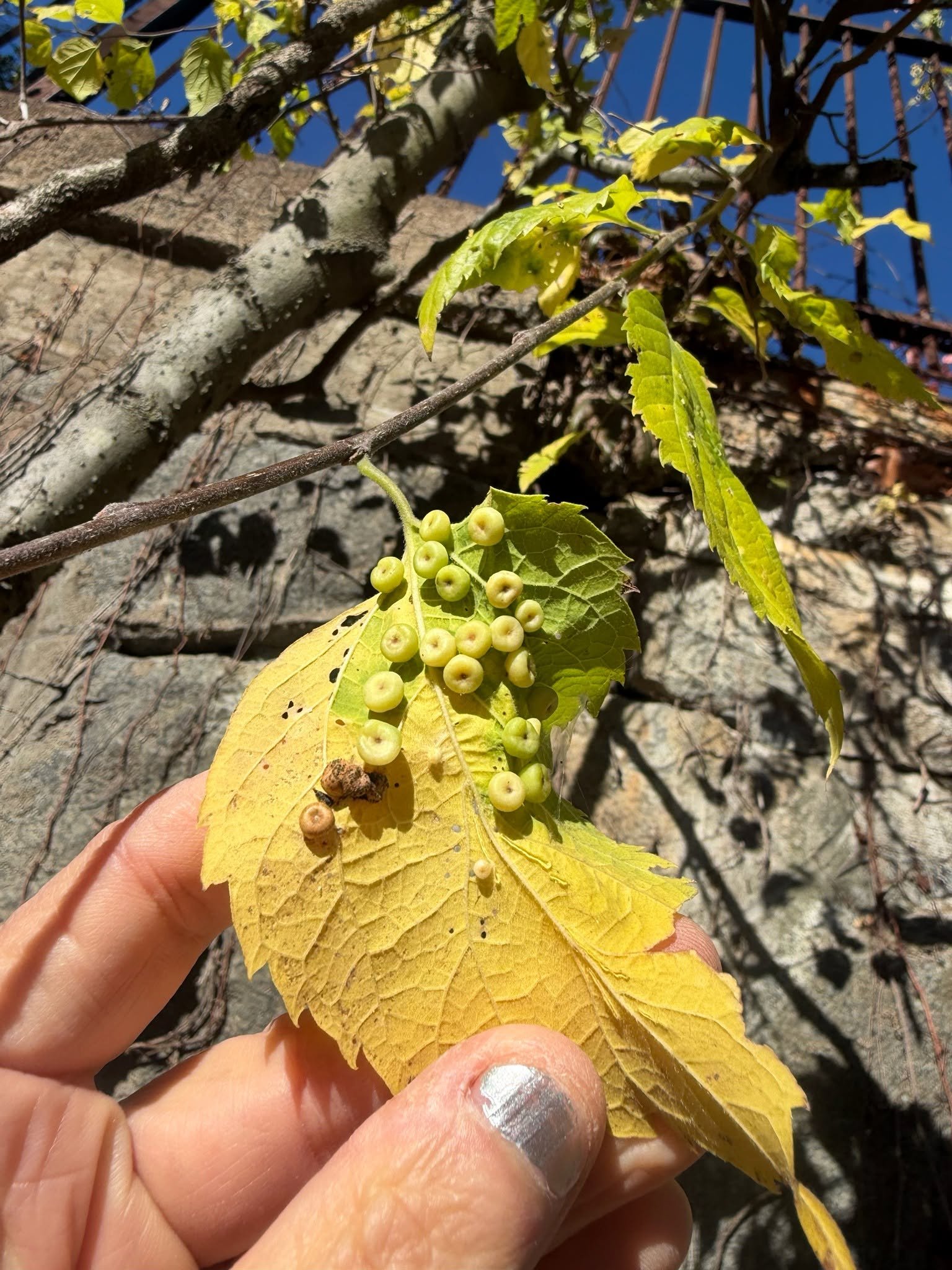
Another question had to do with common hackberry, Celtis occidentalis. While we were mostly enjoying the hackberry nipple galls, it was mentioned that “common hackberry” didn’t seem to be that abundant in the wild. Had any of us encountered a hackberry tree in a forest? It seems that common hackberry, according to Wikipedia, “prefers bottomlands and soils high in limestone.” Massachusetts is limestone-poor, until you get out to the Berkshires. I also looked at a map of iNaturalist observations of Celtis occidentalis and noticed linear clusters of observations following river valleys.
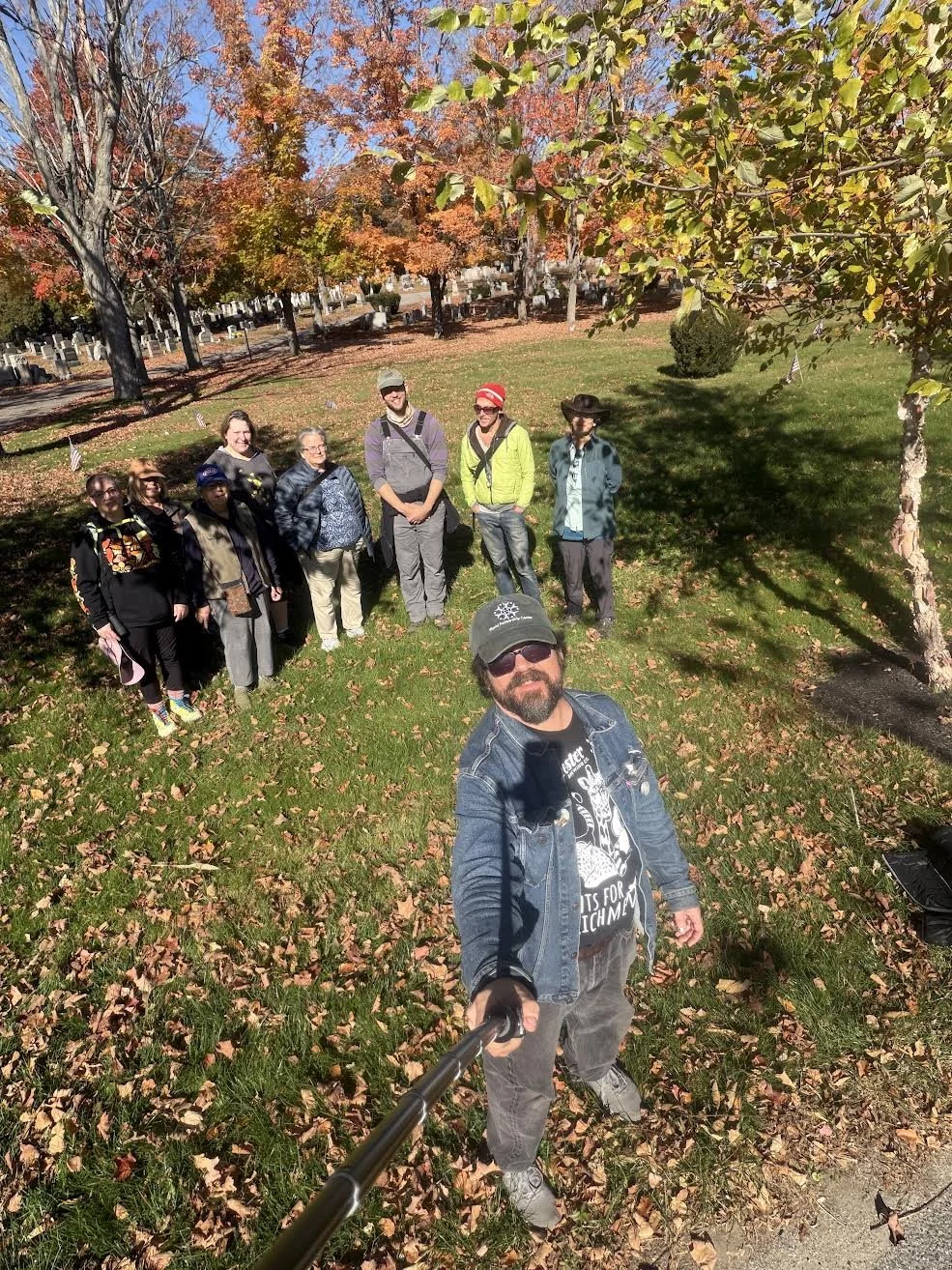
The cemetery was absolutely beautiful, of course, with its riot of sugar maple colors. We were blessed with sunny weather that tipped from chilly up to layer-shedding warmth. Thanks to everyone for coming on this Urban Nature Walk. I’ll try to keep up with the questions as we go forward with more events.